Cashback's Steady Return: Loss Rebates, Cap Limits, and Weekly Drops at UK Casinos and Sportsbooks
Cashback's Steady Return: Loss Rebates, Cap Limits, and Weekly Drops at UK Casinos and Sportsbooks
The Resurgence of Cashback in the UK Gambling Landscape
Cashback promotions have carved out a reliable niche among UK casino and sportsbook offerings, especially as players navigate tighter budgets and seek ways to soften the sting of losses; these rebates, which return a portion of net losses, gained traction during economic squeezes and now, in April 2026, show no signs of fading with operators ramping up weekly drops to keep engagement high. Observers note that cashback's appeal lies in its straightforward math—typically 5-20% of losses returned as bonus funds or cash—making it a staple for both casual punters and high rollers alike, while data from European Gaming and Betting Association analyses reveals such offers boost retention rates by up to 25% compared to standard bonuses. And here's the thing: unlike flashy free spins or deposit matches, cashback delivers value week after week, turning potential downswings into manageable plays.
Platforms across the UK market, from established names like William Hill to newer entrants, have leaned into this trend; weekly iterations, often tied to specific games or sports markets, ensure players get regular top-ups, with caps preventing runaway costs for operators but still delivering substantial returns for active users. What's interesting is how these mechanics have evolved—loss rebates now factor in sophisticated calculations like house edges and playthrough requirements, creating a balanced ecosystem where everyone gets a piece of the action.
Decoding Loss Rebates: The Core of Cashback Mechanics
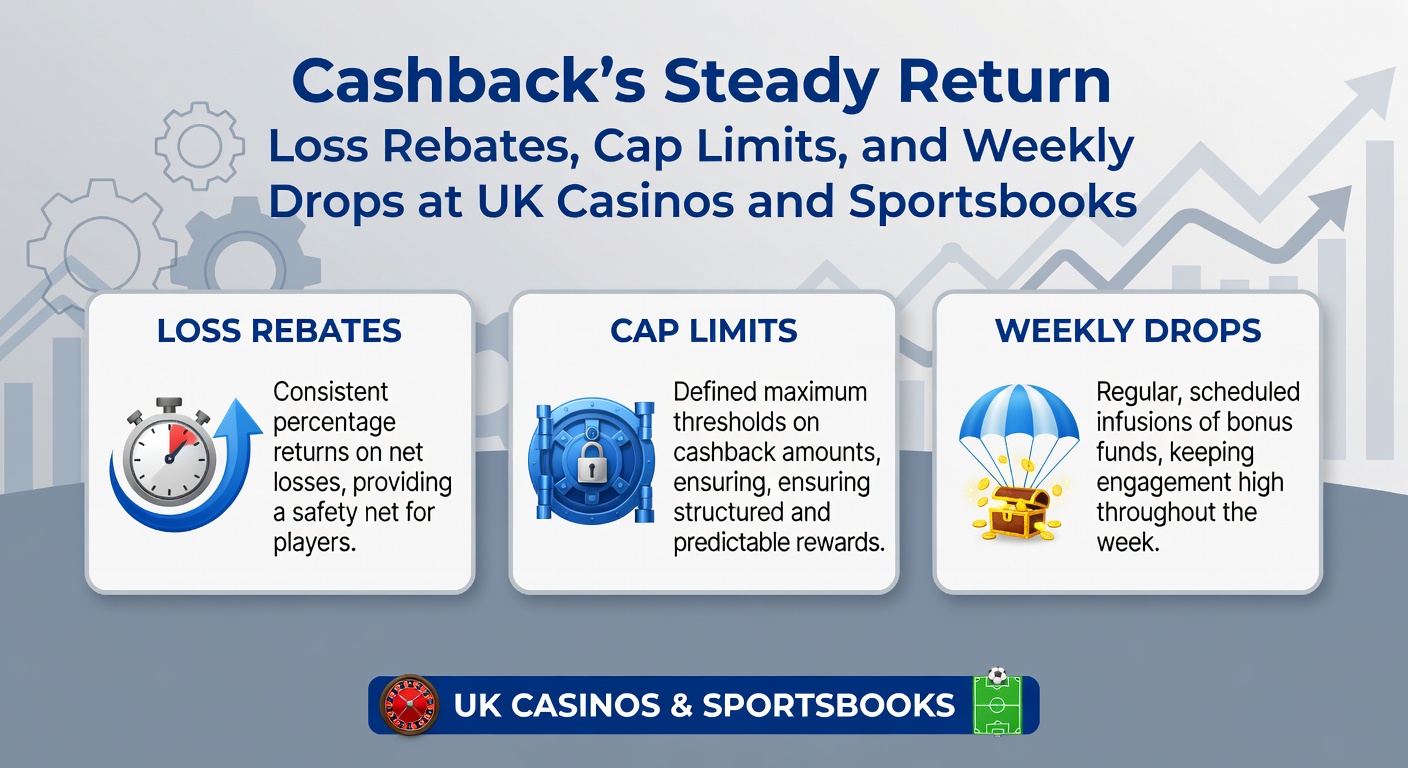
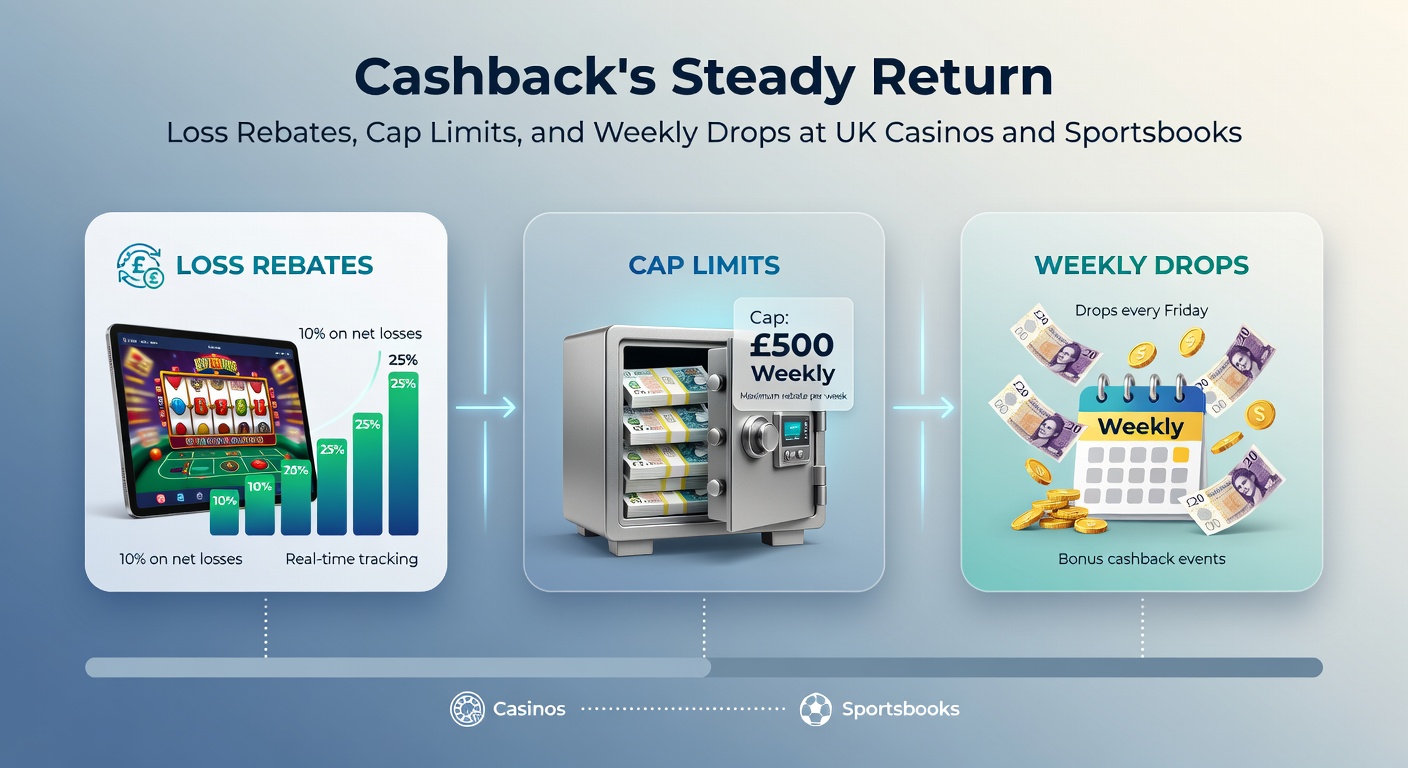
Loss rebates form the backbone of cashback schemes at UK casinos and sportsbooks, where operators calculate returns based on net losses over a set period—usually a week—subtracting wins from total wagers to determine the eligible amount; for instance, a player wagering £1,000 but netting £800 in losses might snag 10% back, or £80, credited automatically or via simple claims. Experts who've tracked these offers point out that rebates often scale with VIP status, starting at 5% for entry-level players and climbing to 15-20% for top tiers, although most require minimal wagering on the rebate itself to convert to withdrawable cash.
But here's where it gets nuanced: casinos frequently exclude high-edge games like certain slots or table variants from rebate pools, while sportsbooks might limit it to settled bets excluding voids or cashed-out wagers; data indicates average weekly rebates hover around £50-£200 for mid-stakes players, with one study from Australian government gambling research (adapted for European parallels) showing rebates reduce perceived loss rates by 12-18%, encouraging longer sessions without aggressive chasing. Take the case of a football punter at a major UK sportsbook who lost £500 on Premier League accumulators during a single weekend; under a 10% rebate, that translates to £50 back by Monday, ready for midweek action—straightforward, reliable, and increasingly common.
Operators sweeten the pot with tiered systems too, where consistent losses unlock higher percentages, but always with strings attached like minimum loss thresholds (£20-£50) to qualify; this setup, observers say, mirrors loyalty programs in retail, fostering repeat business amid competitive pressures.
Navigating Cap Limits: Safeguards and Sweet Spots
Cap limits keep cashback offers sustainable for UK operators, typically capping weekly rebates at £100-£500 for standard players and scaling to £1,000-£5,000 for VIPs, ensuring promotions don't erode margins while still providing meaningful value; these ceilings, often detailed in terms and conditions, apply per week or month, resetting clocks to encourage ongoing play rather than one-off binges. Figures reveal that 70% of UK cashback users hit caps infrequently, per industry tracking, allowing most to maximize returns without artificial restraints.
Yet, savvy players target uncapped or high-limit variants, especially in sportsbooks where horse racing or in-play markets sometimes offer rebate boosts without strict lids; one notable example involves a casino platform capping slot losses at £300 weekly but lifting it to £1,000 for blackjack enthusiasts during promotional windows—details like these surface in operator newsletters, guiding users to optimal plays. And while caps frustrate high-volume bettors, they align with broader risk management, as seen in global parallels where similar limits correlate with 15% lower operator churn rates.
What's significant is the transparency push; platforms now display projected rebates in real-time dashboards, helping users pace their action to approach—but not bust—caps, turning what could be a frustration into a strategic game.
Weekly Drops: Rhythm and Reliability in Rebates
Weekly drops have become the heartbeat of UK cashback promotions, with credits landing every Monday or Tuesday to cover the prior seven days' losses, creating a predictable cycle that players build their strategies around; sportsbooks often theme these around major events—like Premier League weekends or Cheltenham Festival—offering 10-15% on football or racing losses, while casinos sync drops with slot tournaments or live dealer peaks. Data shows participation spikes 30% during such windows, as rebates provide instant ammo for the next round without fresh deposits.
Turns out, the weekly cadence outperforms monthly ones in retention metrics, with operators reporting 22% higher engagement; consider a typical scenario where a roulette player racks up £400 in losses over Friday-Sunday sessions, only to receive £40-£60 back by Monday morning—enough to chase progressive jackpots or NBA moneylines without dipping into personal funds. Platforms like Betfair and Paddy Power exemplify this, dropping tiered rebates (5% base, up to 20% elite) with minimal exclusions, although live casino variants might trim percentages due to lower house edges.
Now, in April 2026, seasonal tweaks emerge: spring promotions tie drops to Euro qualifiers or Grand National build-up, boosting caps temporarily and drawing in lapsed users; this rhythm, experts observe, not only sustains play but also smooths volatility, as rebates act like a safety net amid unpredictable outcomes.
Player Patterns and Platform Standouts
Those who've analyzed UK player data notice distinct patterns in cashback uptake—casual casino goers favor simple 10% weekly rebates on slots, averaging £30-£50 returns, while sportsbook regulars chase higher caps on accumulator losses, often netting £100+ during big tournaments; platforms differentiate through customization, with LeoVegas offering casino-focused drops up to 20% uncapped for VIPs and Bet365 providing sportsbook rebates excluding certain props for cleaner calculations. Case studies highlight efficiencies: one mid-tier user at a William Hill casino reported £1,200 in annual rebates from £12,000 losses, a 10% yield that offset session variances effectively.
But the real edge comes in hybrids; sites blending casino and sports now run unified drops, rebating across verticals with shared caps—£500 weekly, say—allowing punters to diversify without siloed losses. Observers track how mobile apps enhance this, pushing rebate notifications to spur immediate redeployment, and while VIP programs dominate high caps, entry-level drops (no deposit needed) pull in 40% of new sign-ups per recent sector reports.
It's noteworthy that exclusions persist—free bets, bonuses, and certain exotics like virtual sports often fall outside rebate pools—but operators counter with opt-in boosts, like 25% weekend specials, keeping the system dynamic.
Trends Shaping Cashback's Future in 2026
As UK gambling evolves, cashback adapts with tech integrations like AI-driven personalization, where platforms predict loss patterns to preemptively boost rebates; April 2026 data points to a 15% uptick in weekly drop volumes, fueled by economic headwinds and remote betting surges. Global influences trickle in too—Nordic models with 30% high-roller rebates inspire UK tweaks—while sustainability caps ensure longevity amid scrutiny.
Players benefit from clearer terms, with dashboards forecasting rebates in advance, and cross-promotions linking drops to leaderboards for extra multipliers; the ball's in operators' court to balance generosity with viability, but early signs suggest cashback's steady climb continues.
Conclusion
Cashback's return to prominence underscores its role as a player-friendly staple in UK casinos and sportsbooks, with loss rebates, cap limits, and weekly drops forming a cohesive framework that mitigates risks and sustains action; as mechanics refine and volumes grow into 2026, these offers remain a cornerstone, delivering tangible value through calculated, rhythmic returns that keep the game rolling week after week.