Player Navigation Patterns Through Responsible Gambling Tools Provided by Licensed UK Operators
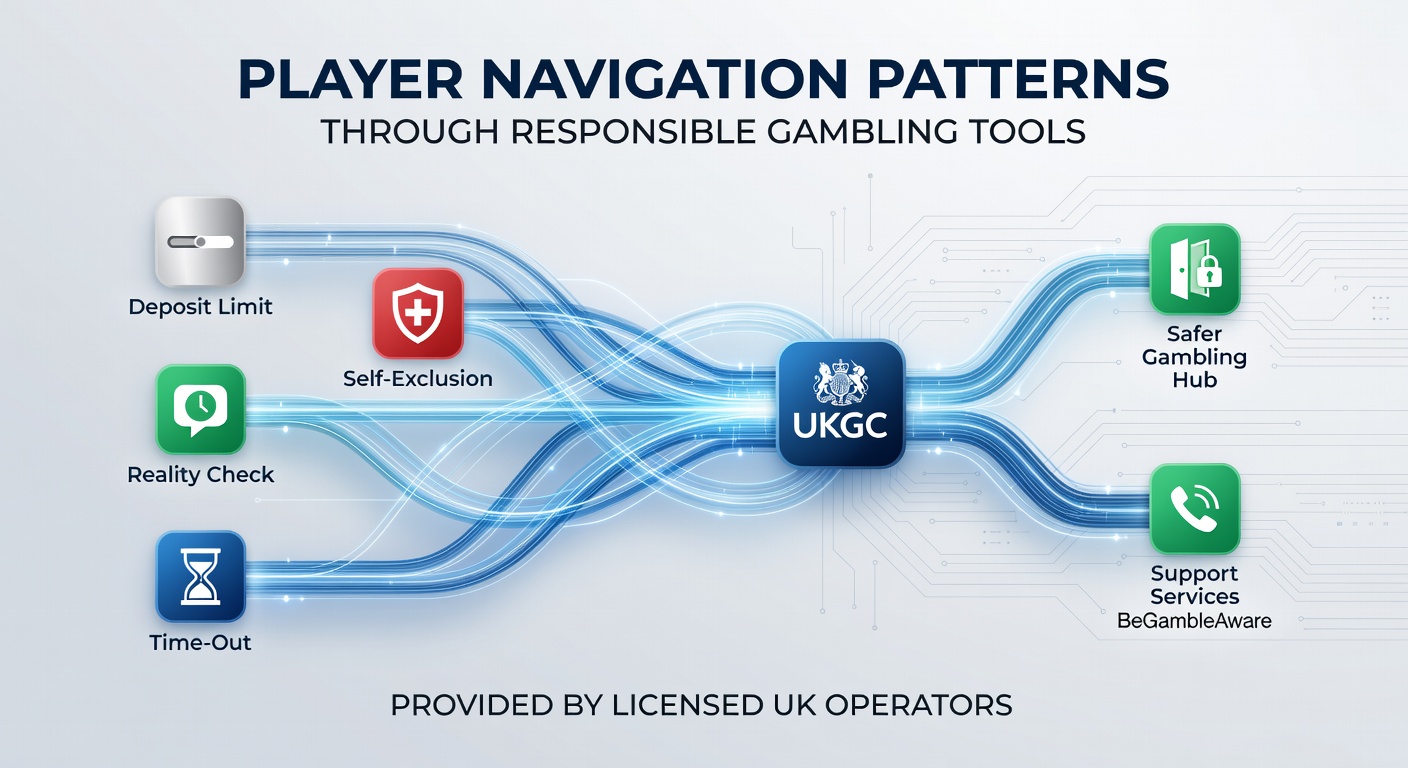 Licensed operators across the United Kingdom deploy a range of responsible gambling tools that include deposit limits, session time reminders, reality checks, cooling-off periods, and self-exclusion options, while players move through these features in patterns shaped by account registration flows, in-game prompts, and post-session reviews. Data from multiple industry reports shows that deposit limit tools attract the highest initial engagement rates because operators present them during account setup and deposit screens, whereas self-exclusion features see lower uptake until later stages of play. Operators structure these tools so players encounter them at predictable touchpoints such as first deposits, milestone alerts after set time intervals, and account dashboard visits, and research indicates that early exposure during onboarding leads to higher configuration rates for basic limits compared with deeper interventions like full self-exclusion.
Core Tool Categories and Access Points
Deposit and spend limits form the entry layer where players set daily, weekly, or monthly caps through simple numeric fields and confirmation buttons, and studies reveal that once players activate a limit they often return to adjust it rather than remove it entirely. Session reminders and reality checks interrupt play at intervals chosen by the player or default operator settings, displaying current spend and time elapsed before prompting continuation or exit decisions. Cooling-off periods allow temporary breaks ranging from 24 hours to several weeks without permanent account closure, and navigation logs from operator systems show that many users select shorter durations first before extending them on subsequent visits.
Self-exclusion registers block access across multiple operators through shared databases, yet players typically reach this option after exploring lighter tools or following external prompts from support channels. Observers note that menu structures place responsible gambling sections under account settings or help centres, creating consistent navigation routes that experienced players follow quickly while new users discover them through pop-up banners or email notifications.
Observed Movement Sequences in Player Journeys
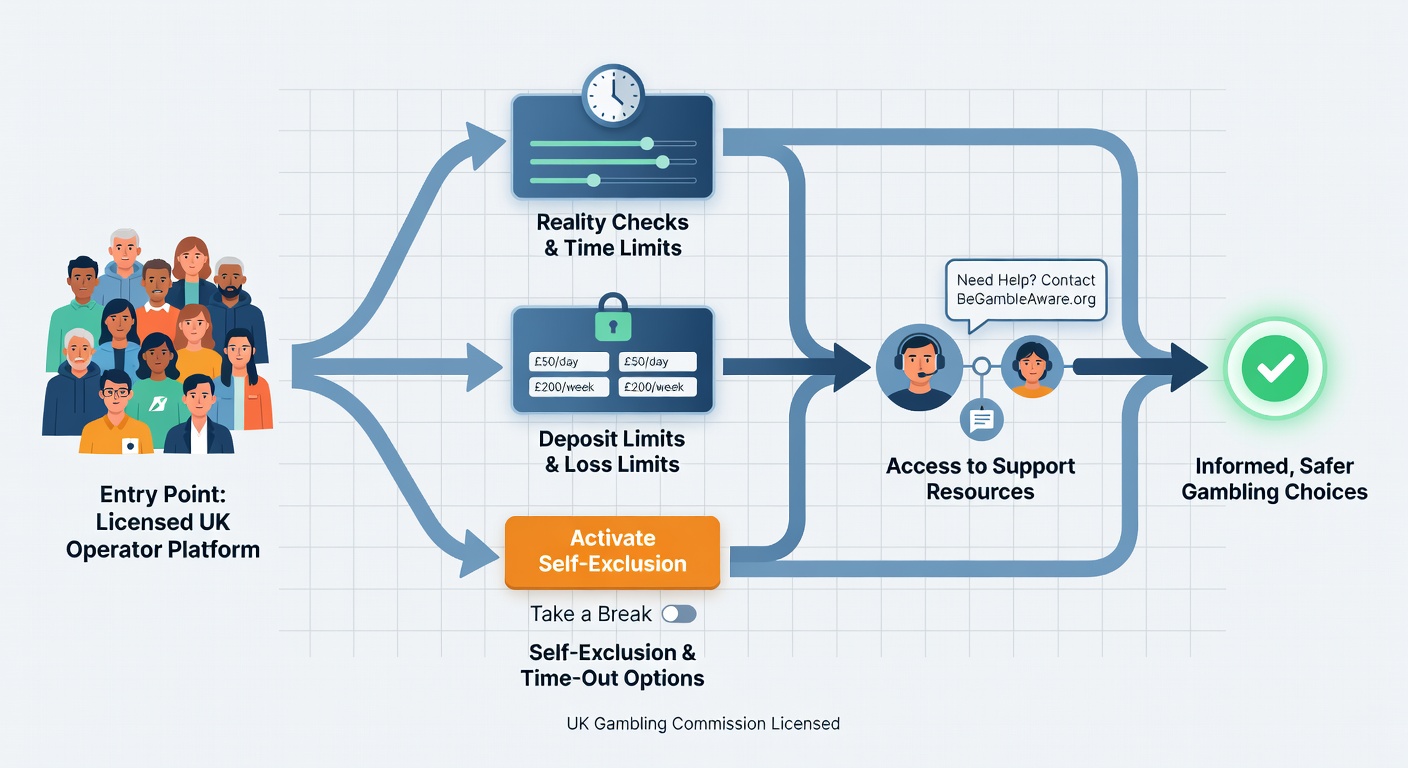
Analysis of user interaction data demonstrates that most players begin with deposit limit configuration during their first or second deposit attempt, then progress to reality check settings after several sessions when prompted by in-game timers. Those who continue deeper often activate cooling-off periods after reviewing their transaction history, whereas self-exclusion appears later in the sequence when spend patterns trigger additional warnings or when players actively search for stronger controls.
Operators track these sequences through backend analytics that record timestamped clicks, form submissions, and page views, and the resulting heatmaps highlight dashboard visits as the central hub where players review and modify multiple tools in a single sitting. Patterns also vary by vertical, with sports betting accounts showing higher reality check usage during live events and casino sessions recording more frequent limit adjustments after bonus play cycles.
Trends Emerging Around May 2026
Platform updates rolled out in early 2026 introduced unified dashboards that combine all tools into one interface, and early indicators from operator reports suggest these changes reduced the number of clicks needed to reach self-exclusion options by roughly 30 percent. Mobile navigation patterns show increased use of in-app quick links that surface after losses exceed preset thresholds, directing players straight to limit adjustment screens without requiring menu searches.
External research from the Australian Gambling Research Centre highlights similar interface simplifications that correlate with steadier engagement across limit tools in other regulated markets, providing comparative context for UK developments. Integration with third-party apps also expanded during this period, allowing players to receive push notifications about approaching limits and complete adjustments without returning to the main site.
Comparative Insights from Broader Research
Figures compiled by the National Council on Problem Gambling in the United States indicate that players who configure multiple tools early maintain lower average session lengths over six-month periods compared with those who use single tools. UK operator data aligns with these observations, showing clustered usage where deposit limits and reality checks often activate together while self-exclusion remains a standalone later choice.
Navigation friction appears lowest when tools sit one click from the main balance display, and longer paths through help menus correspond with reduced completion rates for advanced features. Seasonal spikes occur around major sporting events when volume increases prompt more players to review their existing settings rather than create new ones.
Conclusion
Player navigation through responsible gambling tools at licensed UK operators follows repeatable sequences driven by interface design, prompt timing, and cumulative play history, with deposit limits serving as teh most common starting point and self-exclusion positioned as a later-stage option. Continued platform refinements through 2026 maintain these core patterns while shortening access routes, and cross-market studies confirm that streamlined dashboards support consistent engagement across different player segments. These documented flows provide operators and researchers with measurable benchmarks for evaluating tool effectiveness without relying on individual outcomes.