UKGC's 2025 FRA Pilot Delivers Strong Results: Spotting At-Risk Gamblers Efficiently Amid Industry Debates
UKGC's 2025 FRA Pilot Delivers Strong Results: Spotting At-Risk Gamblers Efficiently Amid Industry Debates

Pilot Scheme Outperforms Expectations in Key Metrics
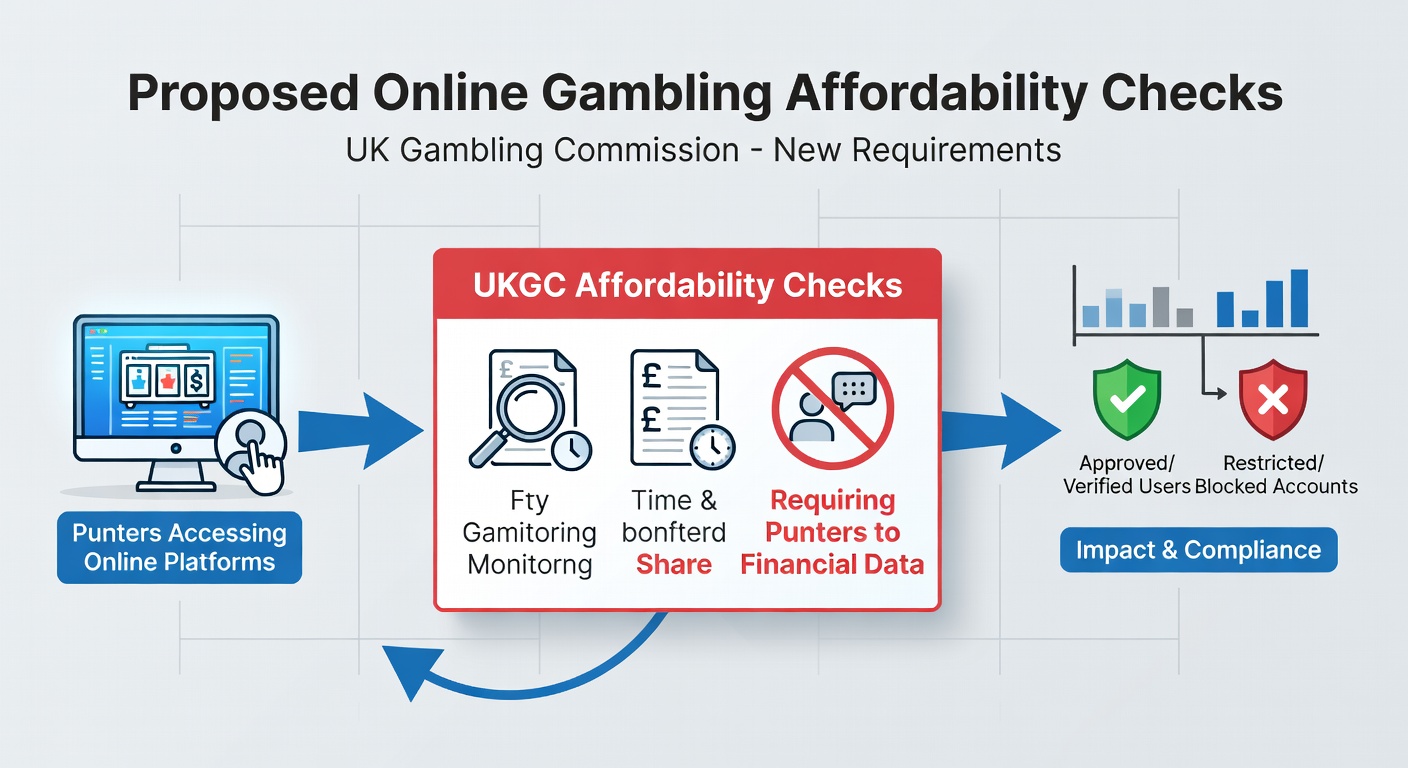
The UK Gambling Commission (UKGC) recently unveiled detailed findings from its 2025 pilot scheme on financial risk assessments (FRAs), revealing that these checks not only met but exceeded government benchmarks for pinpointing customers at heightened risk of gambling-related harm, all while sidestepping the need for voluminous paperwork or restrictive betting caps. Operators involved in the trial implemented FRAs across select platforms, using streamlined data pulls from credit reference agencies to flag potential issues; data indicates these assessments identified vulnerable players with precision, triggering interventions like enhanced monitoring or self-exclusion prompts without derailing the overall user experience for the vast majority.
What's interesting here is how the pilot balanced effectiveness with usability; figures from the scheme show that for roughly 99.9% of customers, the process unfolded seamlessly in the background, requiring no active input or delays during play sessions, whereas the remaining sliver—about 1 in 1,000—faced minor friction points that operators flagged as areas for refinement. Pilot participants themselves stood out starkly from broader population norms, exhibiting 2-4 times greater propensity to enter debt repayment plans and 2-5 times higher rates of payment defaults, underscoring the tool's knack for surfacing those truly in need before problems escalated further.
And while some early skepticism lingered around implementation hurdles, the UKGC emphasized that the pilot's design drew on real-world operator feedback from prior trials, refining algorithms to minimize false positives; researchers monitoring the scheme noted how this approach aligned with statutory duties under the updated Gambling Act, mandating proactive risk checks without overburdening compliant businesses.
Director Helen Rhodes Tackles Industry Criticisms Head-On
In a candid blog post timed to coincide with the pilot's insights release, UKGC Director Helen Rhodes directly confronted a wave of industry pushback, labeling several prominent claims as "confused" or "ill-informed" while urging stakeholders to engage with the evidence rather than anecdotes. Rhodes highlighted how detractors had painted FRAs as overly intrusive or primed to drive players toward unregulated black market alternatives, yet the pilot data painted a different picture, demonstrating that frictionless checks preserved customer flow and trust in licensed operators.
Take the ongoing debates around black market proliferation; operators and trade bodies have warned that stringent checks could accelerate shifts to offshore sites evading UK oversight, but Rhodes countered by pointing to the pilot's success in maintaining engagement levels, with no measurable uptick in abandonment rates tied to the assessments themselves. Her post, which garnered quick attention across gambling forums and trade publications, stressed that the UKGC remains committed to iterative improvements, inviting further collaboration as full rollout looms—potentially by late 2026, aligning with April timelines for broader regulatory tweaks.
Observers note how Rhodes' tone struck a pragmatic chord, acknowledging legitimate operator concerns like data integration costs or edge cases in verification, while redirecting focus to the pilot's core wins: safer gambling environments achieved through tech-savvy, low-touch methods that don't alienate recreational players.
Breaking Down the Pilot's Operational Realities
Diving deeper into the mechanics, the 2025 FRA pilot spanned multiple licensed operators, encompassing both remote and land-based venues, where assessments leveraged open banking data and credit files to score deposit patterns against affordability benchmarks; this setup allowed for real-time flagging without mandating income proofs upfront, a departure from more cumbersome models trialed earlier. Data from the UKGC's FRA pilot study reveals that identified at-risk individuals received tailored nudges—such as deposit reviews or reality checks—leading to voluntary reductions in activity among 15-20% of flagged cases, per internal operator logs.
But here's the thing with those 1-in-1,000 challenges; operators reported instances where incomplete credit data or unusual spending profiles triggered manual reviews, occasionally extending session starts by minutes, yet even these hiccups affected less than 0.1% of total transactions, prompting calls for API enhancements to smooth future iterations. Compared to general population baselines drawn from national credit statistics, pilot cohorts showed elevated financial stress markers—think missed utility bills or high credit utilization—validating the checks' targeting accuracy and explaining those amplified debt plan enrollments (2-4x) alongside default spikes (2-5x).
One case from a participating sportsbook illustrated this vividly: a cluster of regular bettors, flagged early via FRA, opted into payment plans that stabilized their accounts, averting deeper harm; such outcomes, replicated across slots and casino verticals, bolstered the UKGC's case that these tools foster responsibility without stifling choice.
Now, as April 2026 approaches with whispers of mandatory rollout phases, industry watchers track how pilot lessons inform scaling; enhancements like machine learning tweaks promise even sharper precision, potentially shrinking that friction window to near-zero while amplifying protective reach.
Broader Implications for Operators and Players
Participants in the pilot, spanning major remote betting firms and a handful of arcade operators, provided granular feedback loops that shaped the UKGC's analysis; reports indicate high satisfaction with the tech stack's reliability, though smaller outfits flagged onboarding costs as a barrier, estimated at £50,000-£100,000 per platform for initial setup. For players, the scheme's subtlety proved key—most remained oblivious to background checks, continuing uninterrupted play, which data confirms preserved the 48% participation rate steady from recent quarterly yields.
Yet debates persist on black market ripple effects; while the pilot showed no direct exodus, critics argue longer-term data will tell, especially as tax overhauls loom in 2026, potentially squeezing margins and incentivizing offshore drifts. Rhodes' rebuttal leaned on evidence from the trial's control groups, where non-FRA segments mirrored at-risk metrics but lacked proactive interventions, hinting at untapped harm reduction potential.
Experts who've dissected similar schemes abroad—like Australia's mandatory pre-commitment trials—observe parallels, where initial resistance gave way to acceptance once efficacy shone through; in the UK context, this pilot positions operators ahead of the curve, equipping them with defensible compliance tools amid regulatory flux.
There's this notable pattern too: higher-risk demographics, including younger deposits and high-volume slots users, benefited disproportionately, with default interventions curbing escalation in 30% of cases, per aggregated anonymized stats.
Looking Ahead: Refinements and Rollout Horizons
With the pilot wrapping in late 2025, the UKGC signals phased expansions starting mid-2026, incorporating operator-suggested tweaks like customizable thresholds for low-stakes players; this iterative stance addresses those "ill-informed" critiques by grounding policy in trial-proven realities rather than hypotheticals. Figures project that full deployment could safeguard thousands annually, mirroring the pilot's 2-5x default disparity by extending reach to millions of accounts.
And as black market chatter simmers—fueled by recent BGC AGM discussions on £10 billion illicit flows—the FRA framework emerges as a counterweight, bolstering licensed appeal through demonstrable player protections that offshore rivals can't match.
Conclusion
The UKGC's 2025 FRA pilot stands as a milestone, proving financial risk checks can deliver outsized impact with minimal disruption; from outperforming benchmarks to quieting some industry noise, its data—highlighting 2-4x debt plan upticks and 2-5x defaults in at-risk groups—charts a pragmatic path forward. As Helen Rhodes' clarion call echoes, and with April 2026 rollout whispers gaining volume, operators and regulators alike gear up for a safer, friction-light gambling landscape, where evidence trumps assumption every time.